

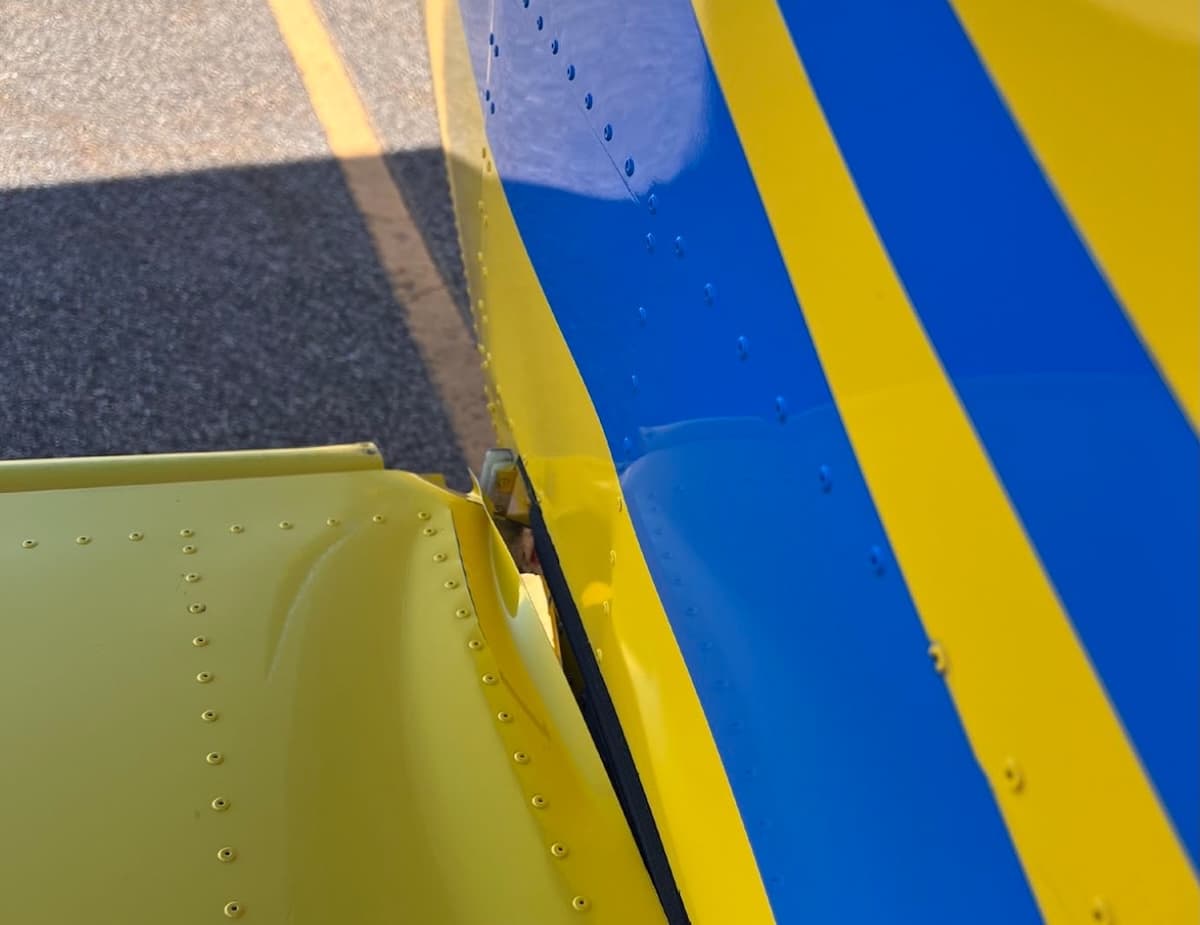
The pilot was practicing a soft field takeoff at the airport in Paris, Idaho.
As the Van’s RV-12 accelerated, the nose lifted more than anticipated and at a lower airspeed. The plane drifted left off the runway. The pilot decreased power and attempted to correct the heading change with rudder, but the airspeed was too low for the rudder to be effective.
The plane hit a precision approach path indicator (PAPI) assembly, sustaining substantial damage to the right wing.
The pilot determined he had incorrectly set the flaps to the second notch (full down) instead of the first notch specified in the pilot’s operating handbook, which he said contributed to the conditions leading to the loss of control.
Probable Cause: The pilot’s failure to properly configure the flaps, which resulted in a loss of directional control during takeoff.
To download the final report. Click here. This will trigger a PDF download to your device.
This September 2024 accident report is provided by the National Transportation Safety Board. Published as an educational tool, it is intended to help pilots learn from the misfortunes of others.
Pitch control on takeoffs and go-arounds (which may occur from the runway with full flaps) is critical. There are many variables that will affect how much the nose raises or doesn’t raise – power, flaps, weather conditions, trim position, and center of gravity. Generally, flaps on high wing models raise the nose and on low wing models lower the nose. With many soft-field takeoffs, the takeoff roll starts with full back control wheel position which must be adjusted forward as the nose wheel comes off the runway to avoid an excessively high pitch or even dragging the tail. The pilot is primarily blaming the excessive pitch at takeoff on the flaperon position and proactively planned to avoid that from happening again by changing his checklist. Good change, but the elevator technique, how his hand controls the back/forward pressure, on the takeoff roll is the most critical factor.