
• Skip to primary navigation
  • Skip to main content
  • Skip to primary sidebar
General Aviation NewsGeneral Aviation News

General Aviation News

Because flying is cool

  • Pictures of the Day
    • Submit Picture of the Day
  • Stories
    • News
    • Features
    • Opinion
    • Products
    • NTSB Accidents
    • ASRS Reports
  • Comments
  • Classifieds
    • Place Classified Ad
  • Events
  • Print Archives
  • Subscribe
  • Show Search
Hide Search

aviation accidents

Twin crashes after running out of fuel

By General Aviation News Staff · December 18, 2024 ·

The pilot’s inadequate in-flight decision-making, which resulted in a total loss of engine power due to fuel exhaustion.

Snow ends low flight

By General Aviation News Staff · December 16, 2024 ·

The pilot’s failure to maintain clearance from snow covered terrain while maneuvering at low attitude. Contributing to the accident was the pilot’s loss of visual reference due to snow and flat light conditions.

Student pilot loses control during engine start

By General Aviation News Staff · December 13, 2024 ·

The pilot’s loss of directional control during engine start.

Carb icing ends night flight

By General Aviation News Staff · December 11, 2024 ·

NTSB Accident Report Carb Icing

The partial loss of engine power due to carburetor icing and the flight instructor’s failure to use carburetor heat in weather conditions conducive to serious carburetor icing.

NTSB blames inadequate planning for mid-air collision at air show

By General Aviation News Staff · December 10, 2024 ·

On Nov. 12, 2022, a Boeing B-17G bomber and a Bell P-63F fighter collided inflight during a performance at the Commemorative Air Force’s Wings Over Dallas air show. Both airplanes crashed, killing all five aboard the B-17G and the sole occupant of the Bell P-63F.

Fuel exhaustion leads to forced landing
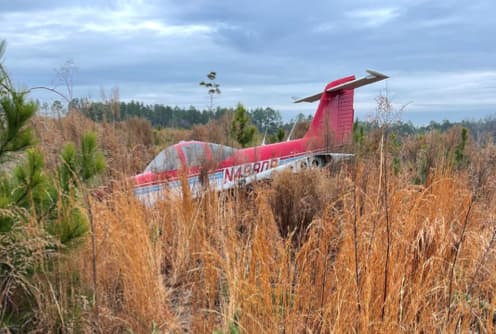
By General Aviation News Staff · December 9, 2024 ·

The pilot’s improper fuel management, which resulted in fuel exhaustion and a total loss of engine power.

Pilot seriously injured when plane encounters downdraft on departure

By General Aviation News Staff · December 6, 2024 ·

The airplane’s exceedance of its critical angle of attack after encountering a downdraft during departure, which resulted in an aerodynamic stall and impact with terrain.

Human Factors: A cold, hard lesson

By William E. Dubois · December 4, 2024 ·

The pilot’s cold weather start technique is blamed for accident when his Cessna 172’s engine quits due to a lack of oil.

Cessnas collide in run-up area

By General Aviation News Staff · December 4, 2024 ·

The pilot’s failure to maintain clearance from another airplane while taxing in the run-up area.

« Previous Page
Next Page »

Primary Sidebar

Read the Latest Issue

Cover of the September 17, 2026 edition of General Aviation News
September 17, 2026

Featured Video

https://youtu.be/_5GlVdS1gpo?si=PEX8RGgp1XCz3-uM

Become A Better Informed Pilot.

Join 110,000 readers each month and get the latest news and entertainment from the world of general aviation direct to your inbox, daily.

This field is for validation purposes and should be left unchanged.

Recent Comments

  • Lt on Ag Pilot Forgets to Refuel For His Next Flight
  • HENRY COOPER on Ag Pilot Forgets to Refuel For His Next Flight
  • Kent Misegades on Girls in Aviation Day Prepares For Takeoff
  • DA on Ag Pilot Forgets to Refuel For His Next Flight
  • Art Friedman on Five Things Your GA Airport Manager Wishes You Knew
  • Are Cee on In-Flight Weather Radar Is Failing General Aviation
  • Javier Lifa on In-Flight Weather Radar Is Failing General Aviation
  • Thomas J Young on Fuel-Oil Contamination Leads to Cessna 172 Engine Power Loss
  • Mark Gibson on Picture of the Day: Cycling Past College Park Airport
  • Andrew J Venuto on Fuel-Oil Contamination Leads to Cessna 172 Engine Power Loss

© 2026 Flyer Media, Inc. All rights reserved. Privacy Policy.

  • About
  • Advertise
  • Comment Policy
  • Submit Press Release
  • Contact Us
  • Privacy Policy
  • Writer’s Guidelines
  • Photographer’s Guidelines